
How to Discern God’s Voice (and Recognize When It’s Not Him)
Learn how to discern God’s voice through Scripture, relationship, and gentle attentiveness, and recognize the difference between God’s voice and harmful inner voices.
Can you recognize God’s voice?
Because I know you’ve heard the whispers.
Sometimes they show up around your body.
- You’re fat.
- Look at that muffin top.
- You’ve ruined your body.
- Nobody would love you looking like this.
Other times, they attach themselves to different places altogether.
- You’re behind.
- You’re failing.
- You should be further along by now.
- You’re not doing enough.
- You’re disappointing God.
I know those whispers well because I’ve heard them all myself.
They used to show up most loudly when I stepped on the scale or caught a glimpse of myself in a mirror. Now they’re just as likely to surface when I’m scrolling social media, after I’ve messed up, done something imperfectly, or replaying a decision I wish I’d handled differently.
My emotional state can shift in seconds…from steady and content to completely discouraged, simply by listening to those thoughts. My insecurities carry guilt, shame, and a heavy sense that no matter how hard I try, I’ll never quite measure up.
For a long time, I believed them.
- I believed people liked what I did for them, not who I was.
- I believed love was transactional and had to be earned.
- I believed I needed to look better, try harder, and get it right more often to be accepted.
And slowly, without realizing it, those voices didn’t just shape how I saw myself…they started shaping how I imagined God saw me, too.
That’s why discernment matters.
Scripture tells us that God speaks, that His people can learn to recognize His voice, and that He leads with truth and love. But Scripture also calls us to be careful listeners, because not every voice we hear, internally or externally, is from Him.
Learning to discern God’s voice isn’t about becoming hyper-spiritual or getting everything right. It’s about learning to recognize the voice of the One we already know through His Word, His character, and the work of His Spirit.
And that kind of discernment doesn’t just affect one area of life. It shapes how we understand ourselves, how we respond to insecurity, and how we walk with God in everyday decisions.
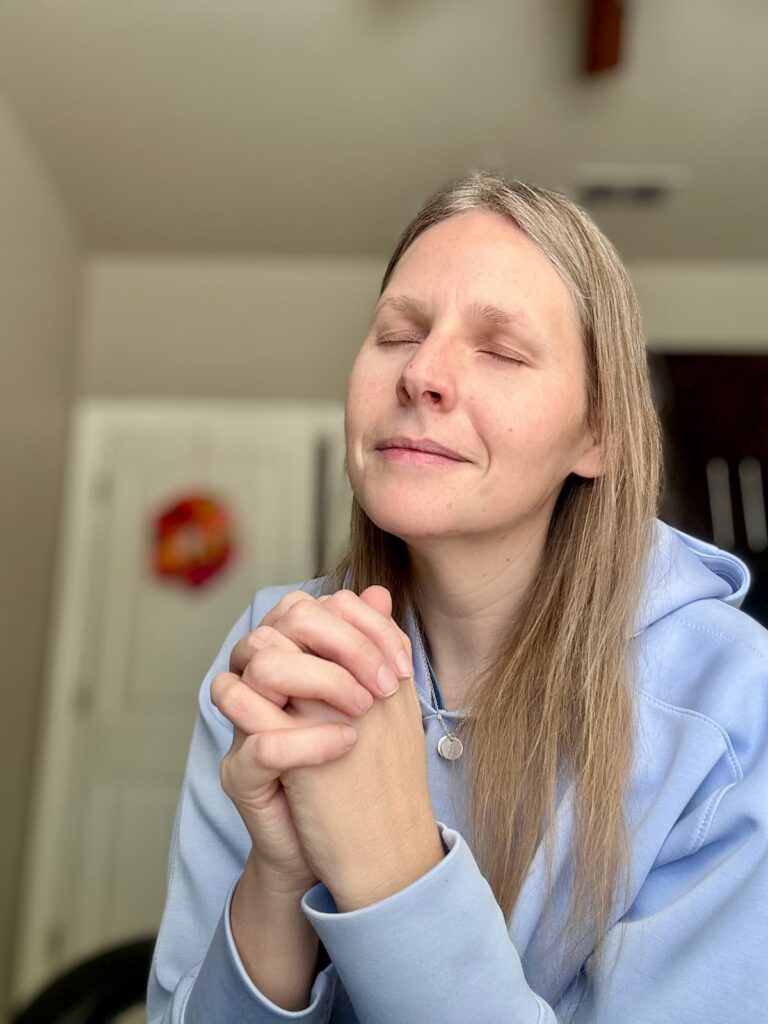
God Speaks & He Invites Us to Listen Attentively
Jesus said, “My sheep hear my voice, and I know them, and they follow me” (John 10:27, ESV).
That verse doesn’t promise that hearing God will always be easy. It promises that it’s relational.
God isn’t hiding. He isn’t silent. And He isn’t trying to make following Him feel like a spiritual scavenger hunt.
At the same time, we don’t listen to God in a vacuum.
We listen from inside real lives, shaped by our past experiences, our bodies, our emotions, our wounds, our habits, and the constant noise around us.
Trauma, comparison, exhaustion, cultural messages, criticism we’ve internalized, even the voices of people who once had power over us…all of it contributes to the inner soundscape we carry around every day.
And sometimes, especially when we’re tired or discouraged, all of those voices feel equally convincing.
That’s why Scripture doesn’t just say “listen”… it also says to test, to examine, to pay attention.
“Beloved, do not believe every spirit, but test the spirits to see whether they are from God” (1 John 4:1, ESV).
Discernment, in that sense, isn’t suspicion. It’s untangling.
It’s slowing down long enough to notice:
What am I hearing right now?
Where might this be coming from?
And does this sound like the God I know?
Discernment Begins With Slowing Down & Noticing
One of the clearest patterns I’ve seen in my own life is this:
When I’m constantly rushing, reacting, and powering through, discernment gets harder.
Not because God stops speaking, but because I stop noticing.
I’ve written about this more fully in How to Hear God’s Voice in a Distracted World and The Ministry of Noticing, but the heart of it is simple: attention matters.
Scripture invites us into this posture again and again.
“Be still, and know that I am God” (Psalm 46:10, ESV).
Stillness isn’t about withdrawing from life or doing nothing. It’s about creating small pockets of space with enough room to notice what’s happening inside us and around us.
Because often, the voices that shape us most aren’t loud. They’re familiar.
And familiarity can feel a lot like truth if we never slow down to question it.
Noticing is what allows us to pause instead of powering through, to name what’s stirring instead of ignoring it, and to bring what’s real into the presence of God without judgment or shame.
God’s Voice Is Consistent With Who He Is
One of the most grounding truths about discerning God’s voice is this:
God’s voice will always reflect God’s character.
Even when God corrects us, He does not humiliate us. Even when He convicts us, He does not crush us.
Scripture describes God as kind, patient, gentle, compassionate, and faithful. That means when He speaks, His words will carry those same qualities. His voice is helpful. It leads us toward what is good, true, and life-giving.
God’s voice moves us toward repentance and hope. It invites growth without shaming us for not being finished yet.
By contrast, the enemy’s voice is not interested in our healing or growth. It is harmful, not helpful. It leads toward isolation, discouragement, anxiety, confusion, and shame. Instead of drawing us closer to God and others, it pulls us inward and downward – fixated on our failures, fears, and inadequacies.
Jesus said that the enemy comes “to steal and kill and destroy” (John 10:10), while He Himself came that we might have life, and have it abundantly. That contrast matters.
When a voice consistently leaves you feeling hopeless, stuck, ashamed, isolated, or defeated – not humbled, not convicted, but crushed – that voice is not reflecting the heart of God.
God’s voice may challenge us, but it always leads us toward wholeness.
Why Direction Matters More Than Intensity
One of the most important lessons Scripture teaches us about discernment is that volume and intensity are not reliable indicators of truth.
God’s voice is often steady, patient, and persistent rather than loud or dramatic. Voices that rush, pressure, accuse, or demand immediate action without wisdom tend not to reflect God’s way.
That’s why discernment is less about asking “How strong does this feel?” and more about asking “Where is this leading me?”
Toward God or away from Him? Toward humility and truth or toward shame and fear? Toward love and growth or toward isolation and despair?
Discernment as a Way of Walking With God
Scripture doesn’t invite us to master discernment. It invites us to walk with God closely enough that His voice becomes familiar.
As we spend time with Him — reading His Word in context, praying honestly, noticing His presence, and paying attention to fruit — we grow in wisdom. Not because we get better at labeling voices, but because we get better at knowing God.
And the more we know Him, the more clearly His voice stands out.
Discernment Grows Out Of Knowing God
One reason discernment becomes clearer over time is simple, but profound:
The more you know God, the easier it is to recognize His voice.
Scripture often uses the word know in a way that goes far beyond information. In both Hebrew (yada) and Greek (ginosko), knowing implies intimacy, relationship, and lived experience…not just facts or information.
This is the kind of knowing Jesus speaks of when He says, “My sheep hear my voice… and they follow me” (John 10:27, ESV).
You recognize the voice of someone you know well. You recognize their tone. Their heart. The kinds of things they would say…and the things they never would.
Discernment isn’t primarily about developing a new skill. It’s about deepening a relationship.
As we spend time with God – reading His Word, talking with Him honestly in prayer, noticing His presence in everyday moments – familiarity grows. And with familiarity comes clarity.
God’s voice becomes easier to recognize not because life gets quieter, but because we know Him better.
Scripture Trains Our Ears
God speaks most clearly and consistently through Scripture. His Word anchors us, shapes us, and teaches us what His voice sounds like.
“Your word is a lamp to my feet and a light to my path” (Psalm 119:105, ESV).
A lamp doesn’t reveal the entire road ahead. It gives just enough light to take the next faithful step. In the same way, Scripture trains our ears and hearts over time, forming us so that when other voices speak, we’re better able to recognize what aligns with God’s truth and what doesn’t.
The more time we spend in Scripture, the more our internal landscape is shaped by God’s voice rather than competing influences.
Not perfectly. Not instantly. But faithfully.
Discernment Is Gentle, Not Harsh
Learning to discern God’s voice doesn’t require suspicion or fear. It requires attentiveness, humility, and trust.
Often, discernment begins with simple yet intentional noticing:
- What direction is this voice leading me?
- Does it move me toward God, toward truth, toward love?
- Or does it pull me toward shame, isolation, and self-condemnation?
God’s voice leads us toward Himself. The enemy’s voice drives us away.
Over time, as we practice noticing with compassion, not judgment, those patterns become clearer. Discernment becomes less about constant questioning and more about recognition.
Discerning God’s Voice Is a Relationship, Not a Test
Hearing God’s voice isn’t about getting everything right.
It’s about staying close.
God is not grading your ability to discern Him. He is inviting you into deeper relationship – one marked by trust, familiarity, and love.
When you miss something, He is patient. When you’re unsure, He is near. When your attention drifts, He does not withdraw.
He gently invites you back.
A Blessing for You
May you grow in confidence as you come to know God more deeply.
May you learn to recognize His voice as kind, steady, and life-giving, even when He is correcting or guiding you.
When other voices grow loud, may you notice the difference between what leads you toward hope and what pulls you toward shame.
May you find rest in knowing that discernment grows with relationship, not perfection.
And as you walk with Him – reading His Word, talking with Him, noticing His presence in ordinary moments – may His voice become increasingly familiar, trustworthy, and clear.
Amen.




Very impressive and good thanks Becky it helps me a lot
Very inspiring……
thank you for this article. I have always struggled with self-confidence as it pertains to my friends. I always thought I made a good impression and was likable enough, however when I became close to people I always wondered why they were hanging out with me and if they actually liked me or if we were still friends because they had already invested time in the relationship. This has plagued me even in my marriage. I think I was applying this belief to God as well. This article has showed me that NO MATTER WHAT, God loves me and I deserve love through his grace not only from Him, but from the people he has placed in my life to show me love on earth.
You are so welcome, Andrea. I’ve shared so many of the same struggles. God is so much bigger than I tend to give Him credit for!