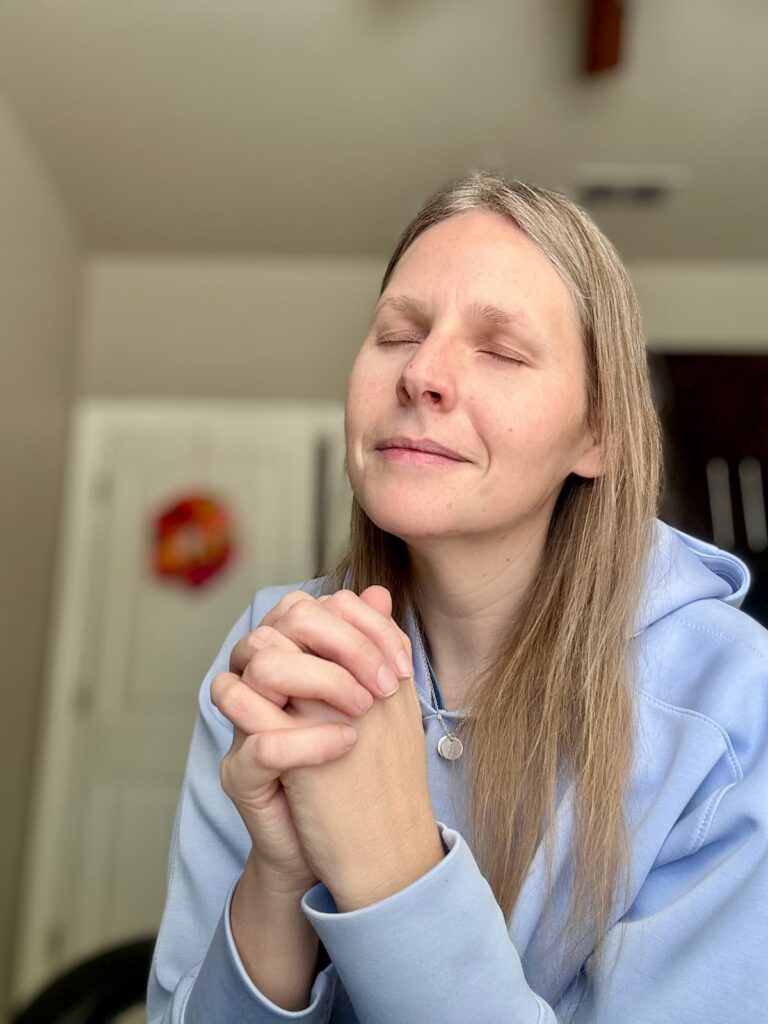
Wholehearted Prayer: How to Pray With All Your Heart, Soul, Mind & Strength
When I worked on August’s journal prompts about deepening your prayer life, I found myself reflecting on some of the things that have strengthened my own prayer life over the years.
None of these practices appeared overnight. They were more of a “one small change” journey (as most of my journeys are!), slowly layered into my relationship with God over time.
Looking back, I’ve realized that many of them fit surprisingly well into the same framework I used in Wholehearted Bible Study: Loving God with All Your Heart, Soul, Mind & Strength.
When Jesus called us to love God with all our heart, soul, mind, and strength, He wasn’t inviting us to engage only part of ourselves. He was inviting us into wholehearted relationship with Him, and prayer is one of the most important ways we nurture that relationship.
So…what does it actually look like for me to pray with my whole heart? Soul? Mind? Strength?
As I thought through the rhythms that have helped me pray more consistently, more boldly, and more deeply over the years, I realized many of them fit naturally into those four categories.
I’m going to share some of the things I do below, but I want to start this post by emphasizing that it’s not about the tips, strategies, and specific things we do. The power is not in those things. The power is in Jesus alone.
These are just specific ways I’ve invested in my relationship with Him that have helped me engage more fully with the Lord in prayer.
❤️ Heart: Engaging My Emotions in Prayer
One thing I’ve noticed over the years is that my prayers tend to become more fervent when I stop praying from a distance.
When someone I love is hurting, it’s easy to offer a quick prayer and move on with my day. I’ve certainly done that before. But some of the deepest prayers I’ve prayed have come from slowing down long enough to really notice the details of what someone is experiencing.
Lately, several people I love have been walking through autoimmune diseases. As I’ve listened to updates, read messages, and checked in with them, I’ve found myself painting a more detailed picture of what their days actually look like.
And I don’t stop at the checklist of details. I allow myself to feel the impact of it.
What would it feel like to wake up every morning already exhausted? To deal with constant muscle pain, brain fog, inflammation, and the frustration of wanting your body to cooperate when it simply won’t (and is, instead, attacking itself for making healthy choices 🥴)?
The more clearly I can picture what they’re carrying, the more deeply I can empathize with them, and that empathy often fuels my prayers…and my relationship with them, too.
When I’m paying attention to the details of someone’s struggle, I’m more likely to remember to check in, send the text, ask how the appointment went, or see how they’re feeling this week. Instead of offering one quick general prayer and moving on, I stay engaged in their story. I think it helps people feel seen. It reminds them they aren’t walking alone.
And it fuels my relationship with God, too.
The more I sit with the brokenness of this world, the more aware I become of how desperately we need Him. There are problems that are simply too big for me, too big for Google searches, AI, positive thinking, or even the best human wisdom we can offer.
The more my heart aches over the suffering around me, the more I find myself longing for His healing, His comfort, His peace, His presence, and ultimately the day when all things will finally be made new.
And the more I see and feel my own limitations, recognizing that familiar feeling of helplessness in my own struggles and those of others, the more often I drop to my knees to lean into His strength.
I want to be a noticer (read more on that in this post -> The Ministry of Noticing: Tuning In to God, Your Life, Your Heart, and the People Around You.
I want to notice God at work in everyday life and give it space to impact me. I want to notice people and the details that are easy to overlook. I want to pay attention to the specific burdens they’re carrying, the prayers they’ve asked for, and the ways God might be inviting me to encourage them.
Maybe part of that desire comes from my own years of insomnia. During some of the hardest (and longest) seasons of that journey, I had a few people who stayed engaged. They didn’t stop asking, “How did you sleep?“, even after 6 1/2 years.
They remembered details. They asked thoughtful questions. They checked in. They prayed for things that most people overlooked. Those small acts of attention made me feel deeply seen and deeply loved, and that’s a gift I want to keep giving to others.
I’ve found that the more carefully I notice people, the more wholeheartedly I pray for them.
💜 Soul: Engaging My Body in Prayer
In my Wholehearted Bible Study post, I talked about the Hebrew word nephesh, which is often translated as “soul.” The biblical picture is much bigger than the way we typically use that word today. It’s not just the invisible, spiritual part of you. It’s your whole living, breathing self.
That’s part of why I’ve come to appreciate the physical posture of prayer more over the years.
For a long time, I never thought much about my posture when I prayed. But I’ve had pastors and mentors point out that throughout Scripture, people often engaged their bodies in worship and prayer.
We see people engaging their bodies in worship and prayer. David wrote, “Lift up your hands to the holy place and bless the Lord!” (Psalm 134:2, ESV). Paul encouraged believers to pray while “lifting holy hands” (1 Timothy 2:8, ESV). Again and again, we see physical expressions of faith.
I’ve been incorporating more of those over the years.
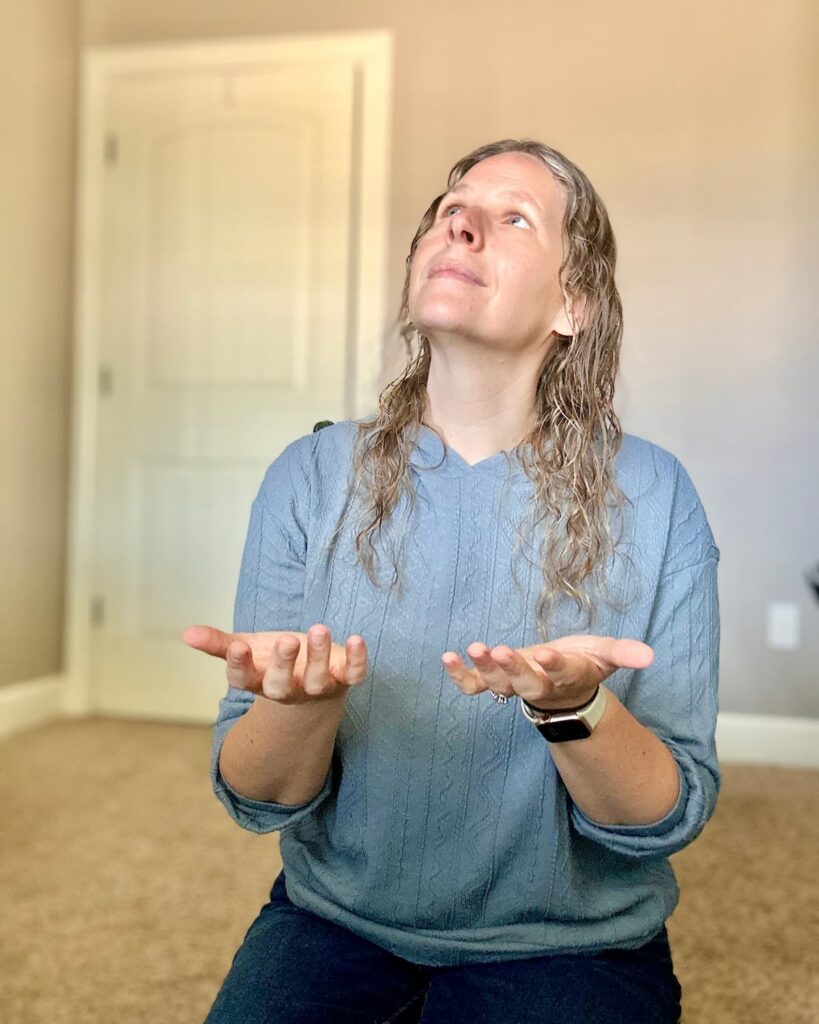
Sometimes I kneel beside my bed as an outward expression of my inward experience of deep pleading, my dependence on God, and my trust in His sovereignty.
Other times, it looks like sitting with my hands open in surrender (this post dives deeper into Open-Handed Living) while I pray. Sometimes it looks like lifting my hands when a worship song connects deeply with something I’ve been praying about. Sometimes it’s a bowed head, and sometimes it’s lifting my eyes toward the sky while I talk with Him.
The posture itself isn’t the point.
The point is engaging my whole self in the conversation of prayer.
God certainly hears me when I’m driving, folding laundry, or whispering a quick prayer while unloading groceries. Physical posture isn’t a requirement for meaningful prayer. But I’ve found that involving my body sometimes helps my heart, mind, and emotions move in the same direction, drawing nearer to Christ.
Open hands remind me to surrender, kneeling reminds me to trust, and lifted hands remind me to worship.
Prayer isn’t just something I think about. It’s something I participate in with my whole self.
One of the most meaningful reminders of this each week comes at the end of our church services. Our pastor often invites us to hold out our hands as a posture of receiving from the Lord as he reads blessings from Scripture.
It’s a small gesture, but I’ve come to love it. Week after week, it reminds me to unclench my fists of control and open my hands back up to Him in continually growing trust.
🧠 Mind: Engaging My Thoughts in Prayer
One of the reasons I love the Psalms so much is because David was incredibly honest about what he was feeling.
He didn’t sugarcoat his emotions or pretend everything was fine when it wasn’t.
He talked about fear, grief, disappointment, anger, confusion, loneliness, and desperation. He poured out his emotions before the Lord with remarkable honesty.
As a big feeler, I love that about him! David also reminds me not to stop there, in the emotional outpour.
Again and again, we see David, this man after God’s own heart, shift from expressing his raw feelings to reminders of truth that come to mind.
He remembers God’s faithfulness, character, provision, power, and promises. And then he prays from that foundation.
Remembering is a powerful thing (read more about that in Raising Your Ebenezer).
I’ve tried to do that more and more in my own prayers.
My first reaction to my own or someone else’s struggles is often full of a lot of raw, unprocessed emotions, but I always want those emotions tethered to truth.
I often use “ands” to do this.
- This feels overwhelmingly heartbreaking…and You are the God of all comfort. (2 Corinthians 1:3-4)
- It seems like this situation is out of control and beyond repair…and You are so good at creatively bringing beauty even out of the ugliest of ashes. (Isaiah 61:3)
- This feels impossible…and You can do more than we can even imagine (Matthew 19:26)
You’ll notice I added Bible verse references to each of those because Scripture gives me solid ground to stand on, an anchor for stability, when my emotions are surging.
Sometimes that means praying verses about God’s character. Other times, it means remembering examples of His faithfulness. Often, I pray the different names of God.
When I’m praying for someone who is suffering, I might call out to Jehovah Rapha, the Lord who heals. When I’m feeling anxious about a situation I can’t control, I remember that He is El Roi, the God who sees. When life feels uncertain, I pray to Jehovah Jireh, the Lord who provides.
Wholehearted prayer doesn’t ignore emotions, but it does allow me space to feel them and still stay anchored in truth.
Like David, we can honestly express our fears, grief, and questions while staying grounded in the truth of who God is and what He has done.
💪 Strength: Growing Toward Praying Without Ceasing
I so want to be a woman who prays without ceasing, cultivating an ongoing awareness of God’s presence and an ongoing conversation with Him throughout the day (1 Thessalonians 5:16-18).
I’m definitely still growing in that.
One thing that has helped me over the years is intentionally building prayer into rhythms that are already part of my day, and my morning quiet time has become one of the sweetest.
I journal almost every day, and that consistency has deepened my prayer life, creating a regular “coffee date” with the Lord where we can connect.
My journals are filled with prayers, notes, Scriptures, gratitude lists, reflections, brain dumps, and some questionable stick figures. They aren’t pretty, and they certainly aren’t organized, but they help me stay engaged and seeking His voice, His guidance, and His presence.
As a visual learner, writing things down helps make things more concrete for me. Seeing a prayer on paper helps me remember it. Drawing it or connecting it to a song helps me engage it from another angle.
Sometimes I write out Scriptures I’m praying over someone. Sometimes I jot down song lyrics. Sometimes I draw little pictures or stick figures that help me visualize what I’m praying about.
And then I come back to those pages again.
I remember what my loved ones are carrying. I remember to seek the Lord again. I remember to watch for answered prayers. Sometimes I flip back through old journals and realize God answered a prayer I’d almost forgotten I’d prayed.
That simple rhythm has helped me notice what God is doing, remember what He’s already done, and stay connected to conversations we’ve been having over days, weeks, months, and sometimes even years.
There isn’t one “right” way to journal prayers, but thoughtful questions and prompts often help jump-start my prayers and slow me down enough to pay attention to what God is doing and where He may be inviting me into deeper trust, deeper surrender, and deeper conversation with Him.
If you’d like to give that a try, you might enjoy August Journal Prompts for Deepening Your Prayer Life.
Wholehearted Prayer Is Relational Prayer
Wholehearted prayer is not an item on my checklist. It’s a deepening relationship with my Savior.
Every conversation, every desperate plea, every prayer of gratitude, every whispered “Help me, Jesus,” is another invitation to know Him a little more.
It’s a reminder of my role and God’s role.
My role is to notice, care, ask, trust, persist, and surrender.
God’s role is to lead, provide, comfort, strengthen, heal, sustain, and answer according to His wisdom.
Lately, my boys and I have been belting out “God Did” every chance we get in the car. We sing it loudly. Usually a bit off-key. Sometimes with dramatic arm motions that probably make the people at stoplights question our sanity.
But I love what that song reminds me of.
It points my attention back to what God is capable of. What He has already done and will continue to do.
Not what I’m capable of. Not what my prayers are capable of.
What God is capable of.
And I think that’s ultimately what wholehearted prayer is about.
It’s bringing my whole heart, soul, mind, and strength into connecting with my Savior who is already fully capable, fully present, fully loving, and fully trustworthy.
My confidence in boldly praying isn’t in my prayers.
It’s in the God I’m praying to.